


Still, much depends on whether Canada plunges into a recession.
Workers will likely cede more power to employers this year as the labour market continues to cool, but that doesn’t necessarily point to a wave of mass layoffs or even the end of working from home, though much depends on whether Canada plunges into a recession.
The jobs market has come off the boil, having steadily weakened throughout 2023 as high interest rates worked their way through the economy and dampened demand. Just 100 jobs were added in December, Statistics Canada said on Jan. 5, capping off a year in which the unemployment rate rose to 5.8 per cent from five per cent in January 2023.
Trending
- Subscriber only. David Rosenberg: Canada was once productive and competitive, but not today Subscriber only
- Bank of Canada says the country faces a productivity ’emergency’
- CRA reverses course, exempts bare trusts from new regulations
- Economy grows more than expected, keeping the Bank of Canada ‘on its toes’
- Pensions put this couple in enviable position as they shift to living off retirement savings
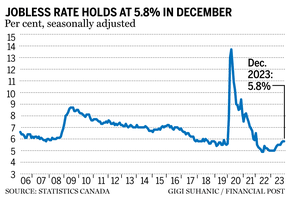
The bad news isn’t over just yet, economists predict, with forecasts for the year-end unemployment rate ranging from 6.6 per cent, according to the Royal Bank of Canada, to six per cent or more, according to Deloitte Canada.
Just how weak the labour market gets depends on the severity of any economic downturn. The good news is that many economists predict Canada could dodge a severe recession, with economic growth staying flat instead of cratering. Such an outcome means the labour market will remain in relatively good shape throughout 2024, Brendon Bernard, senior economist at jobs site Indeed, said.
“We’re seeing the labour market soften, but from a really strong starting point,” he said. “The hope for (this) year is that even if things continue to soften, as the latest trends suggest, we can at least hold on.”
Source: https://financialpost.com/fp-work/canada-jobs-market-2024-more-cooling-work-from-home-stay
In other words, workers fretting about losing their jobs in a flood of layoffs might have little reason to worry. A series of headlines about high-profile job cuts in sectors such as technology and banking may have led many to believe 2023 was a bad year for layoffs. Yet, the number of people who lost their jobs remained quite low, Bernard said. So far, it looks as if that trend could persist into 2024. “Absent a real sort of deterioration in the broader economic situation, I don’t see a reason (low layoff rates) wouldn’t continue,” he said.


